
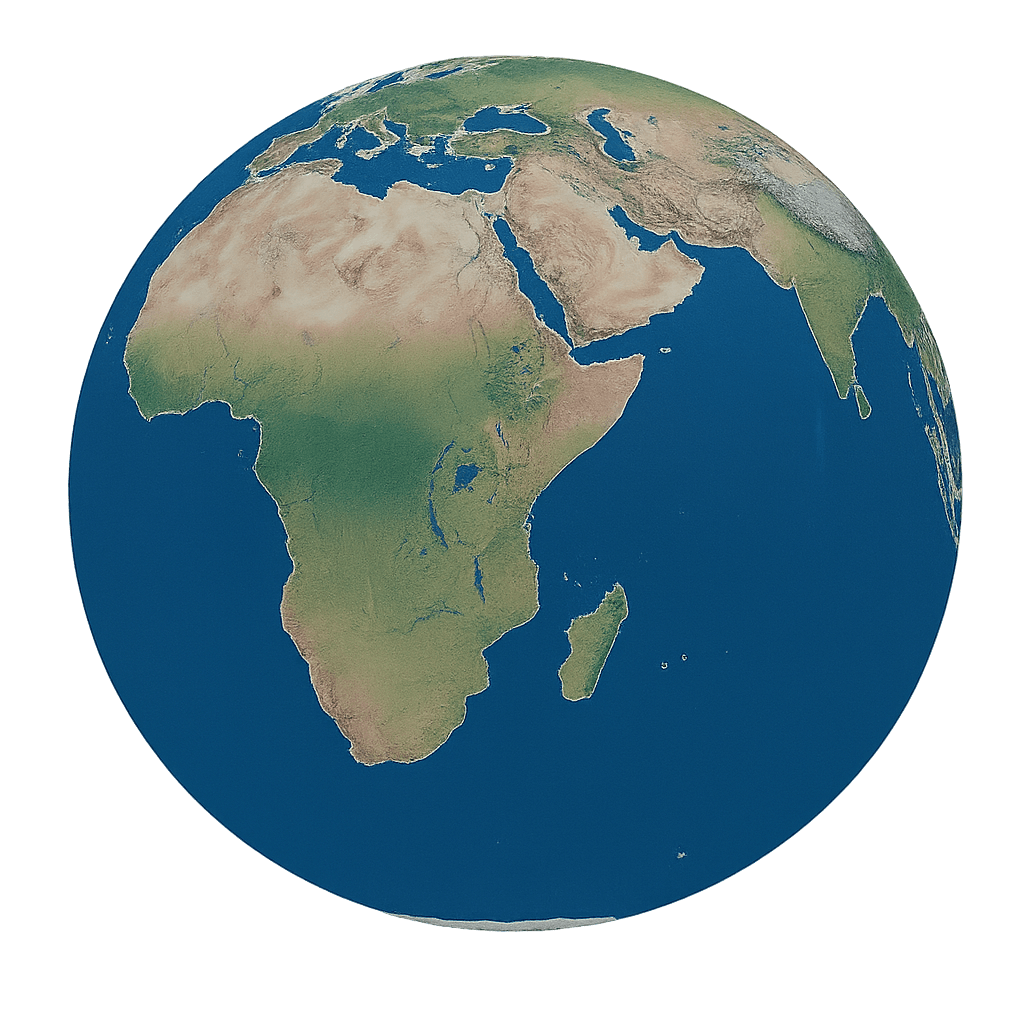
Asia Pacific Data Center Market to Surge at 19.5% CAGR, Anticipated to Reach USD 188.33 Billion by 2035
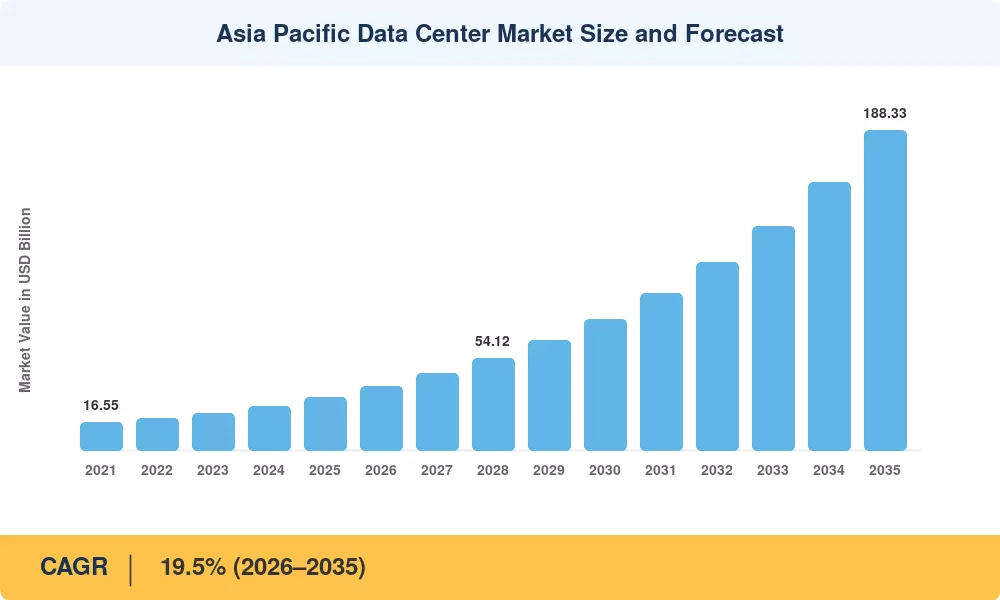
Asia-Pacific Data Center Market
Asia Pacific Data Center Market is expanding rapidly, driven by AI, cloud adoption, digitalization, and rising demand for advanced infrastructure
Asia Pacific’s data center market is rapidly expanding as AI, cloud adoption, and digitalization drive demand for scalable, power-efficient infrastructure.”
JAPAN, JAPAN, JAPAN, August 28, 2026 /EINPresswire.com/ -- The Asia-Pacific Data Center Market stood at USD 31.25 Billion in 2025 and is projected to reach USD 37.90 Billion in 2026, before climbing to USD 188.33 Billion by 2035, expanding at a 19.5% CAGR during the forecast period. The region is experiencing rapid data-center expansion as cloud computing, artificial intelligence, digital services, and enterprise technology adoption accelerate. Increasing demand for scalable computing infrastructure is encouraging operators to establish new facilities across major technology hubs.— Market Research Future
China currently accounts for approximately 31.5% of the regional data center landscape, supported by hyperscale campuses across Guizhou, Inner Mongolia, and the Greater Bay Area. India represents one of the fastest-growing sub-regions, with a projected 21.5% CAGR, supported by capacity expansion from Jio, Adani, and Tata across Mumbai, Chennai, and Hyderabad.
Download Exclusive Sample Copy Of This Report Here -
https://www.marketresearchfuture.com/sample_request/21604
Hyperscale Infrastructure Expansion
Hyperscale data centers are becoming a major component of Asia-Pacific's digital infrastructure. Large technology companies and cloud service providers require extensive computing capacity to support artificial intelligence, streaming platforms, enterprise applications, online commerce, and digital ecosystems. The development of hyperscale facilities is particularly visible in countries with strong cloud adoption and expanding digital economies. Large campuses provide scalability, advanced cooling, high-density computing, redundant power systems, and sophisticated connectivity infrastructure for demanding workloads.
The increasing deployment of hyperscale facilities is also encouraging investment in surrounding infrastructure. Fiber networks, renewable energy projects, power transmission systems, and connectivity exchanges are developing alongside major data-center clusters.
Cloud Computing Driving Demand
Cloud computing remains one of the strongest growth engines for the Asia-Pacific Data Center Market. Enterprises are moving applications, databases, storage, and business processes to cloud platforms to improve scalability, flexibility, and operational efficiency. Public cloud adoption is expanding across industries including banking, healthcare, retail, manufacturing, telecommunications, and government. As organizations migrate larger workloads, demand for regional computing facilities capable of delivering low-latency and reliable cloud services continues to increase.
Hybrid and multi-cloud strategies are creating additional infrastructure requirements. Businesses increasingly combine private environments with public cloud platforms, encouraging data center operators to provide interconnected facilities, flexible capacity, and carrier-neutral connectivity.
Artificial Intelligence and High-Density Computing
Artificial intelligence is creating a new wave of demand for advanced data center infrastructure throughout Asia-Pacific. AI training and inference workloads require substantial computing power, specialized accelerators, high-speed networking, and efficient thermal management. Traditional facilities are therefore being upgraded to accommodate higher rack densities. Operators are investing in liquid cooling, advanced power distribution, optimized airflow, and specialized infrastructure capable of supporting GPU-intensive workloads.
The growth of generative AI and enterprise AI applications is expected to reinforce this trend. Organizations across the region are increasingly deploying AI for customer service, financial analysis, manufacturing, cybersecurity, healthcare, and business intelligence.
Data Center Colocation Growth
Colocation services are gaining popularity among enterprises that require professional infrastructure without the expense of constructing and managing their own facilities. Providers offer power, cooling, physical security, network connectivity, and operational support within purpose-built environments.
The expanding presence of international companies across Asia-Pacific is supporting demand for localized colocation facilities. Businesses can place critical workloads closer to customers and employees while maintaining access to major telecommunications and cloud ecosystems.
Interconnection is another important advantage. Modern colocation facilities increasingly provide direct connections to cloud platforms, telecommunications carriers, internet exchanges, and enterprise networks, supporting faster and more reliable data exchange.
Edge Data Center Development
The growing number of connected devices and real-time applications is encouraging the development of edge data centers. These smaller facilities place computing resources closer to users and connected devices, reducing latency and improving application responsiveness.
Edge infrastructure is becoming relevant for smart cities, autonomous mobility, industrial automation, gaming, content delivery, telecommunications, and Internet of Things applications. Asia-Pacific's large urban populations create significant opportunities for distributed computing infrastructure.
As 5G networks expand, edge facilities can become increasingly important for applications requiring rapid data processing. Telecom operators and infrastructure providers are therefore exploring distributed architectures that combine centralized hyperscale capacity with localized edge computing.
Buy Now the Detailed Report -
https://www.marketresearchfuture.com/checkout?currency=one_user-USD&report_id=21604
Regional Analysis
China remains a dominant contributor to regional data-center development. Its large digital economy, extensive cloud adoption, technology sector, and government-supported computing initiatives have encouraged the construction of major hyperscale campuses in several strategic locations.
India is emerging as one of the region's most attractive growth markets. Increasing internet penetration, digital payments, cloud adoption, artificial intelligence, and enterprise digitization are generating substantial demand for additional capacity in Mumbai, Chennai, Hyderabad, Bengaluru, and other technology centers.
Japan, Singapore, South Korea, and Australia also remain important data-center destinations. These markets benefit from mature digital ecosystems, strong connectivity, enterprise technology adoption, and established cloud infrastructure, although land, power availability, and regulatory considerations can influence expansion strategies.
Renewable Energy and Sustainability
Energy consumption is becoming a critical consideration for data-center operators. As facilities grow larger and computing workloads become more intensive, companies are seeking ways to improve power efficiency and reduce environmental impact.
Renewable energy procurement is gaining importance across the region. Operators are exploring solar power, wind energy, power purchase agreements, renewable energy certificates, and other approaches to support sustainability objectives. Advanced cooling technologies are also becoming increasingly relevant. Liquid cooling and other high-efficiency systems can help manage heat generated by high-density computing while improving energy utilization and supporting AI-focused infrastructure.
Key Market Drivers
Digital transformation across Asia-Pacific is a primary factor supporting data-center demand. Governments, enterprises, and consumers are adopting digital services at a rapid pace, generating increasing volumes of data that require secure storage and processing. The expansion of e-commerce, digital banking, streaming services, social media, and mobile applications is further increasing infrastructure requirements. Organizations need reliable computing environments capable of handling large traffic volumes and continuously operating critical applications.
Artificial intelligence, cloud computing, 5G connectivity, and the Internet of Things are creating additional demand. Together, these technologies are increasing the amount of data generated and processed across the region, supporting long-term investment in data-center infrastructure.
Market Opportunities
One significant opportunity lies in emerging Asian economies where digital adoption is accelerating. Countries with expanding cloud usage, growing internet populations, and increasing enterprise technology investments can attract new data-center developments. Another opportunity comes from AI-ready infrastructure. Data-center operators that can provide high-density power, advanced cooling, low-latency networking, and scalable GPU infrastructure can position themselves to serve rapidly expanding artificial intelligence workloads.
The growth of sustainable infrastructure also presents opportunities for technology providers. Renewable power systems, energy-efficient cooling, intelligent power management, and data-center optimization technologies can help operators address rising energy costs and sustainability requirements.
Challenges and Restraints
Power availability is one of the major challenges facing large data-center developments. Hyperscale and AI-focused facilities can require substantial electricity, making access to reliable and affordable power an important consideration when selecting new locations. Land availability and permitting can also affect construction timelines, particularly in densely populated technology hubs. Operators may need to explore secondary locations or develop more efficient facility designs to overcome these constraints.
High capital expenditure is another challenge. Building modern facilities requires substantial investment in land, power infrastructure, cooling equipment, networking systems, security, and specialized computing infrastructure. Rising construction and energy costs can influence project economics.
Competitive Landscape
The regional competitive environment includes global data-center operators, cloud service providers, telecommunications companies, colocation specialists, and infrastructure investors. Companies are expanding capacity through new campuses, acquisitions, partnerships, and long-term customer agreements.
Major technology and infrastructure companies are increasingly focusing on AI-ready facilities and sustainable operations. Competition is shifting beyond basic floor space toward power availability, connectivity, cooling capabilities, reliability, scalability, and access to renewable energy.
Strategic partnerships are also becoming important. Collaboration between data-center operators, utilities, telecommunications providers, cloud companies, and governments can accelerate infrastructure development while addressing power, connectivity, and regulatory requirements.
Browse In-depth Market Research Report -
https://www.marketresearchfuture.com/reports/asia-pacific-data-center-market-21604
Future Outlook
The outlook for the Asia-Pacific Data Center Market remains highly positive as digital transformation continues across the region. Rising cloud adoption, artificial intelligence, enterprise modernization, and expanding digital consumer services are expected to sustain strong demand for computing infrastructure. India, China, Southeast Asia, Japan, Australia, and South Korea will continue to present opportunities, although development conditions will vary according to energy availability, connectivity, regulation, land costs, and sustainability requirements.
Future facilities are expected to become increasingly intelligent, energy-efficient, interconnected, and AI-ready. Technologies such as liquid cooling, renewable power integration, automation, edge computing, and high-density infrastructure will play increasingly important roles in shaping regional development.
Key Takeaways
The Asia-Pacific Data Center Market is expanding rapidly, supported by cloud computing, artificial intelligence, digital services, 5G, IoT, and enterprise transformation. Its projected increase to USD 188.33 Billion by 2035 demonstrates the region's growing importance within the global digital infrastructure ecosystem. China remains a major regional contributor, while India is emerging as a particularly fast-growing destination for new capacity. Other established markets, including Japan, Singapore, South Korea, and Australia, continue to provide important opportunities for data-center operators and technology providers.
Sustainability, power availability, advanced cooling, and AI-ready infrastructure will increasingly influence investment decisions. Companies capable of combining scalable capacity with efficient, reliable, and environmentally responsible infrastructure are positioned to benefit from long-term regional demand.
Frequently Asked Questions
What is the Asia-Pacific Data Center Market?
It represents the development, operation, and expansion of data-center infrastructure supporting cloud, enterprise, AI, digital, and connectivity services across the region.
What is driving regional growth?
Cloud computing, AI adoption, digital transformation, IoT, 5G, e-commerce, and increasing data generation are key growth drivers.
Which country has the largest share?
China accounts for approximately 31.5% of the regional landscape, supported by large hyperscale developments.
Which country is growing fastest?
India is identified as a high-growth sub-region, supported by expanding digital services and major infrastructure investments.
Why is AI important for data centers?
AI workloads require high-performance computing, GPUs, high-density power, advanced cooling, and high-speed networking.
What is a hyperscale data center?
A hyperscale facility is a very large, scalable computing environment designed to support extensive cloud, enterprise, and digital workloads.
What are the major challenges?
Power availability, land constraints, high construction costs, sustainability requirements, and regulatory approvals are important challenges.
What is the future outlook?
The outlook is strong, with cloud, AI, edge computing, and digital transformation expected to drive continued infrastructure expansion.
➤➤ Latest Market Intelligence from Market Research Future:
Intranet As A Service Market-
https://www.marketresearchfuture.com/reports/intranet-service-market-8084
Machine Vision Market-
https://www.marketresearchfuture.com/reports/machine-vision-market-1510
Workforce Management Market-
https://www.marketresearchfuture.com/reports/workforce-management-market-2388
Enterprise Content Management Market-
https://www.marketresearchfuture.com/reports/enterprise-content-management-market-3915
Identity Verification Market-
https://www.marketresearchfuture.com/reports/identity-verification-market-10381
Online Sports Betting Market-
https://www.marketresearchfuture.com/reports/online-sports-betting-market-10480
5G Base Station Market-
https://www.marketresearchfuture.com/reports/5g-base-station-market-10523
Metaverse In Gaming Market-
https://www.marketresearchfuture.com/reports/metaverse-in-gaming-market-10753
Marine Management Software Market-
https://www.marketresearchfuture.com/reports/marine-management-software-market-10769
Intelligent Process Automation Market-
https://www.marketresearchfuture.com/reports/intelligent-process-automation-market-6065
Application Security Market-
https://www.marketresearchfuture.com/reports/application-security-market-3624
Market Research Future
Market Research Future
+1 855-661-4441
email us here
Legal Disclaimer:
EIN Presswire provides this news content "as is" without warranty of any kind. We do not accept any responsibility or liability for the accuracy, content, images, videos, licenses, completeness, legality, or reliability of the information contained in this article. If you have any complaints or copyright issues related to this article, kindly contact the author above.
