Hongrita at NPE: A Closer Look at a Premium High Volume Injection Molding Factory in Daily Production
HONG KONG, July 17, 2026 /EINPresswire.com/ -- When production engineers assess a new injection molding partner, the exhibition floor provides a starting point. The substantive evaluation comes later: can the supplier maintain dimensional consistency at volume, coordinate multi-component tooling across long production runs, and absorb project complexity without sacrificing delivery reliability? Those are the operational questions that define a High-Volume Injection Molding Factory - a manufacturing system that connects mold design, precision injection, smart production control, and quality monitoring into a continuous production loop. Hongrita has built its capabilities around that standard. Founded in 1988 and expanded through production bases in Shenzhen, Zhongshan, and Penang, Malaysia, the company operates a multi-facility manufacturing structure that supports complex, sustained injection molding work across automotive, medical, and industrial sectors.
NPE As a Practical Lens for High-Volume Injection Molding Evaluation
NPE draws a broad cross-section of injection molding suppliers together, but the sourcing decisions that follow extend well beyond the exhibition itself. Engineers who connect with a supplier at the show return with a set of follow-on questions that a factory must answer with evidence: what cavity architecture supports the required output rate, how are tolerances maintained across shifts and batch cycles, what happens when in-process monitoring identifies a deviation, and who handles the tooling, quality, and engineering coordination within a single production system.
Hongrita uses the NPE context to bring that conversation forward rather than defer it. The company's core competence structure - Multi-Component Injection Molding, Multi-Cavitation Mold, LSR Injection Molding, Precision Injection Molding, and Turnkey Solution - describes a production system designed for sustained, technically demanding work. Daily production, not exhibition presence, is where these capabilities are tested.
Daily Production Starts with Multi-Cavitation Mold and Precision Injection Molding
High-volume injection molding begins with two interlocking variables: the mold structure and the injection process it governs. Multi-cavitation molds determine how many finished parts each production cycle can yield. Precision injection molding determines whether each of those parts meets the dimensional, material, and assembly requirements that downstream processes depend on. When these two elements are well-matched to a project's requirements, they form the capacity and quality baseline that long-term sourcing relationships are built on.
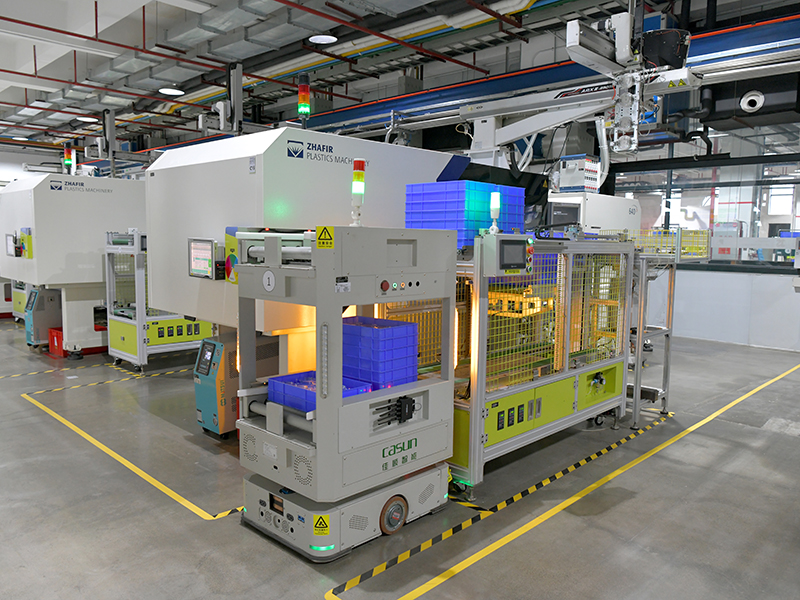
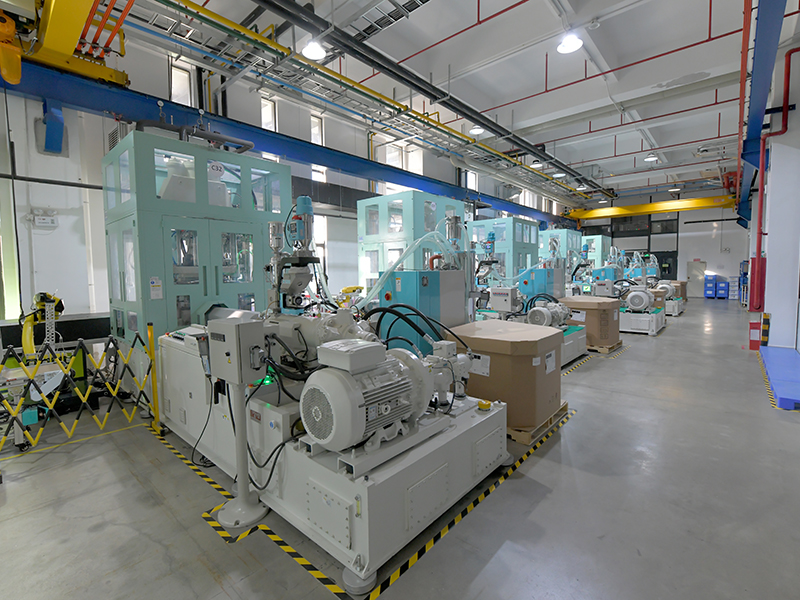
Hongrita maintains dedicated laboratory inspection infrastructure and precision injection molding workshops that keep mold performance, process control, and quality checks in close operational alignment. The company's core capability framework positions Multi-Cavitation Mold alongside Multi-Component Injection Molding, Precision Injection Molding and Turnkey Solution, and Laboratories as the primary axes of its manufacturing system - a structure that reflects how mold design, process discipline, and inspection function together in daily production rather than as separate operations.
Digitalized Intelligent Manufacturing Turns Volume into Repeatable Output
Consistent high-volume output is a process management challenge as much as a capacity challenge. A factory that reaches high output quantities without structured planning, real-time process visibility, and systematic quality monitoring introduces variability that compounds across long production runs - dimensional drift, rework cycles, and inconsistent batch results that add cost and delay at the assembly stage.
Hongrita's Digitalized Intelligent Manufacturing Platform addresses this through connected systems that coordinate advanced tooling solutions, smart manufacturing practices, engineering team integration, and quality monitoring into an operational whole. Within Hongrita's precision injection molding workshop, quality issues identified during production are tracked and acted on promptly, reducing defect rates and supporting product consistency and stability across batches and shifts. This operational approach has been recognized with the Industrie 4.0 China Awards 2024 Smart Factory designation and an Industry 4.0-1i recognition - external markers of the production discipline the platform is designed to maintain.
Precision Tooling Examples Make Production Capability Inspectable
The most useful evidence of a high-volume injection molding factory's production depth is not a general capacity statement - it is a set of documented tooling examples that project teams can examine against their own part specifications, material requirements, and cycle-time targets.
Hongrita's precision tooling page presents several multi-component and multi-cavity mold examples with specific cavity count, material combination, and cycle time data. A Mitnehmer part uses a 16+16 cavity configuration with POM and TPE at approximately 20 seconds per production cycle. A Thumbwheel component using a 3K process runs 4+4+4 cavities with PC, ABS, and TPE at 22 seconds per cycle. A 3-Component Magnifier operates at a 1+1+1 cavitation with PMMA, POM, and PA reinforced with 30 percent glass fiber at 45 seconds per cycle. These examples are drawn from published precision tooling documentation and represent actual tooling configurations; cycle times and parameters for individual projects depend on part geometry, material selection, cavity count, and validation requirements. The range of material combinations shown - engineering plastics, elastomers, and fiber-reinforced grades - gives project teams a substantive basis for assessing whether Hongrita's tooling experience aligns with their sourcing needs.
Quality Systems and Factory Growth Support Premium Manufacturing Trust
The premise of premium manufacturing is verifiable. Hongrita holds ISO 9001 for quality management, ISO 14001 for environmental management, IATF 16949 for automotive-sector production quality, ISO 13485 for medical-device manufacturing quality, ISO 45001 for occupational health and safety, ISO/IEC 27001 for information security management, and ISCC PLUS for sustainable material chain assurance. The company is also FDA registered, a compliance signal relevant to customers sourcing components for health-related end uses.
The manufacturing history behind these systems reinforces this credibility. From its founding in Hong Kong in 1988, Hongrita has expanded into a multi-facility group with production operations in Shenzhen, Zhongshan, and Penang. Innovation investment has been recognized externally: an R&D 100 Winner designation in 2021 and the Gold Medal of the Geneva Inventions Award in 2022 reflect the tooling and process development that has supported the company's growth and sector reach.
From NPE Interest to Supplier Evaluation, Hongrita Keeps the Next Step Clear
Converting exhibition engagement into a qualified supplier assessment means moving from general capability awareness into project-specific discussion: part materials, cavity requirements, cycle-time targets, in-process quality monitoring, and the downstream assembly or inspection conditions the molded parts must meet.
Hongrita supports this transition through a technical resource library that includes published guides on injection molding defects and troubleshooting, in-mold welding for plastic parts, and multi-components indexing technology. These materials give engineering teams a substantive entry point for process-level dialogue before formal project scoping begins.
For project teams evaluating a high-volume injection molding factory following NPE, Hongrita provides a structured basis for the next conversation - grounded in precision mold design, digitalized manufacturing, certified quality systems, and multi-cavitation tooling experience across complex material combinations. Full capability information and inquiry support are available at https://www.hongrita.com/
NPE As a Practical Lens for High-Volume Injection Molding Evaluation
NPE draws a broad cross-section of injection molding suppliers together, but the sourcing decisions that follow extend well beyond the exhibition itself. Engineers who connect with a supplier at the show return with a set of follow-on questions that a factory must answer with evidence: what cavity architecture supports the required output rate, how are tolerances maintained across shifts and batch cycles, what happens when in-process monitoring identifies a deviation, and who handles the tooling, quality, and engineering coordination within a single production system.
Hongrita uses the NPE context to bring that conversation forward rather than defer it. The company's core competence structure - Multi-Component Injection Molding, Multi-Cavitation Mold, LSR Injection Molding, Precision Injection Molding, and Turnkey Solution - describes a production system designed for sustained, technically demanding work. Daily production, not exhibition presence, is where these capabilities are tested.
Daily Production Starts with Multi-Cavitation Mold and Precision Injection Molding
High-volume injection molding begins with two interlocking variables: the mold structure and the injection process it governs. Multi-cavitation molds determine how many finished parts each production cycle can yield. Precision injection molding determines whether each of those parts meets the dimensional, material, and assembly requirements that downstream processes depend on. When these two elements are well-matched to a project's requirements, they form the capacity and quality baseline that long-term sourcing relationships are built on.
Hongrita maintains dedicated laboratory inspection infrastructure and precision injection molding workshops that keep mold performance, process control, and quality checks in close operational alignment. The company's core capability framework positions Multi-Cavitation Mold alongside Multi-Component Injection Molding, Precision Injection Molding and Turnkey Solution, and Laboratories as the primary axes of its manufacturing system - a structure that reflects how mold design, process discipline, and inspection function together in daily production rather than as separate operations.
Digitalized Intelligent Manufacturing Turns Volume into Repeatable Output
Consistent high-volume output is a process management challenge as much as a capacity challenge. A factory that reaches high output quantities without structured planning, real-time process visibility, and systematic quality monitoring introduces variability that compounds across long production runs - dimensional drift, rework cycles, and inconsistent batch results that add cost and delay at the assembly stage.
Hongrita's Digitalized Intelligent Manufacturing Platform addresses this through connected systems that coordinate advanced tooling solutions, smart manufacturing practices, engineering team integration, and quality monitoring into an operational whole. Within Hongrita's precision injection molding workshop, quality issues identified during production are tracked and acted on promptly, reducing defect rates and supporting product consistency and stability across batches and shifts. This operational approach has been recognized with the Industrie 4.0 China Awards 2024 Smart Factory designation and an Industry 4.0-1i recognition - external markers of the production discipline the platform is designed to maintain.
Precision Tooling Examples Make Production Capability Inspectable
The most useful evidence of a high-volume injection molding factory's production depth is not a general capacity statement - it is a set of documented tooling examples that project teams can examine against their own part specifications, material requirements, and cycle-time targets.
Hongrita's precision tooling page presents several multi-component and multi-cavity mold examples with specific cavity count, material combination, and cycle time data. A Mitnehmer part uses a 16+16 cavity configuration with POM and TPE at approximately 20 seconds per production cycle. A Thumbwheel component using a 3K process runs 4+4+4 cavities with PC, ABS, and TPE at 22 seconds per cycle. A 3-Component Magnifier operates at a 1+1+1 cavitation with PMMA, POM, and PA reinforced with 30 percent glass fiber at 45 seconds per cycle. These examples are drawn from published precision tooling documentation and represent actual tooling configurations; cycle times and parameters for individual projects depend on part geometry, material selection, cavity count, and validation requirements. The range of material combinations shown - engineering plastics, elastomers, and fiber-reinforced grades - gives project teams a substantive basis for assessing whether Hongrita's tooling experience aligns with their sourcing needs.
Quality Systems and Factory Growth Support Premium Manufacturing Trust
The premise of premium manufacturing is verifiable. Hongrita holds ISO 9001 for quality management, ISO 14001 for environmental management, IATF 16949 for automotive-sector production quality, ISO 13485 for medical-device manufacturing quality, ISO 45001 for occupational health and safety, ISO/IEC 27001 for information security management, and ISCC PLUS for sustainable material chain assurance. The company is also FDA registered, a compliance signal relevant to customers sourcing components for health-related end uses.
The manufacturing history behind these systems reinforces this credibility. From its founding in Hong Kong in 1988, Hongrita has expanded into a multi-facility group with production operations in Shenzhen, Zhongshan, and Penang. Innovation investment has been recognized externally: an R&D 100 Winner designation in 2021 and the Gold Medal of the Geneva Inventions Award in 2022 reflect the tooling and process development that has supported the company's growth and sector reach.
From NPE Interest to Supplier Evaluation, Hongrita Keeps the Next Step Clear
Converting exhibition engagement into a qualified supplier assessment means moving from general capability awareness into project-specific discussion: part materials, cavity requirements, cycle-time targets, in-process quality monitoring, and the downstream assembly or inspection conditions the molded parts must meet.
Hongrita supports this transition through a technical resource library that includes published guides on injection molding defects and troubleshooting, in-mold welding for plastic parts, and multi-components indexing technology. These materials give engineering teams a substantive entry point for process-level dialogue before formal project scoping begins.
For project teams evaluating a high-volume injection molding factory following NPE, Hongrita provides a structured basis for the next conversation - grounded in precision mold design, digitalized manufacturing, certified quality systems, and multi-cavitation tooling experience across complex material combinations. Full capability information and inquiry support are available at https://www.hongrita.com/
Hongrita Plastics Ltd.
Hongrita
email us here
Visit us on social media:
LinkedIn
Facebook
YouTube
X
Legal Disclaimer:
EIN Presswire provides this news content "as is" without warranty of any kind. We do not accept any responsibility or liability for the accuracy, content, images, videos, licenses, completeness, legality, or reliability of the information contained in this article. If you have any complaints or copyright issues related to this article, kindly contact the author above.