

Japan Biologic Drug Lifecycle Management Market is expected to reach US$ 9.69 Billion by 2033 | DataM Intelligence
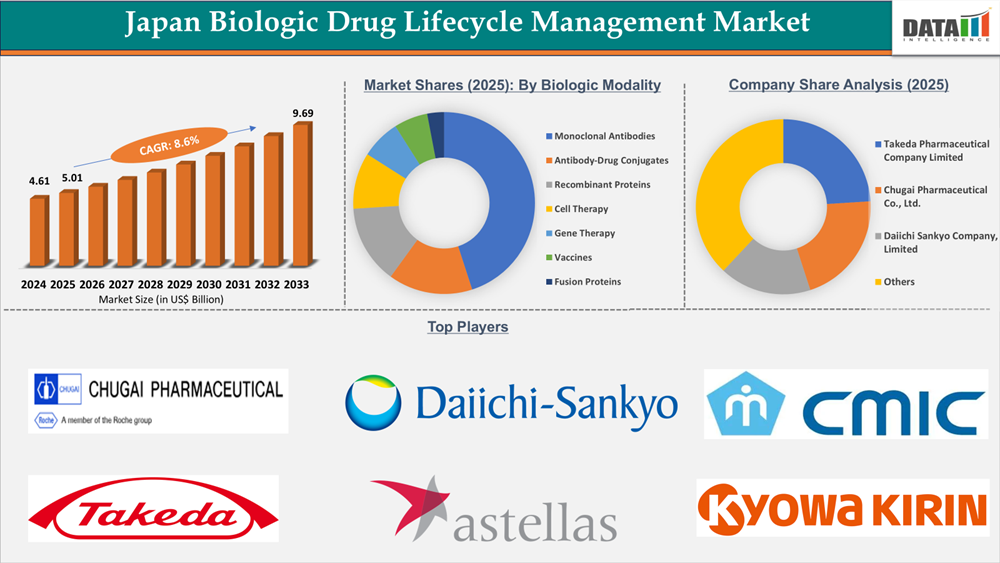
Japan Biologic Drug Lifecycle Management Market
The Japan Biologic Drug Lifecycle Management Market is expected to reach at a CAGR of 8.6% from 2026 to 2033.
The Japan Biologic Drug Lifecycle Management Market is advancing rapidly, driven by innovation, regulatory support, and growing demand for specialty therapies.”
OSAKA, TOKYO, JAPAN, February 18, 2026 /EINPresswire.com/ -- Market Overview:— DataM Intelligence
The Japan Biologic Drug Lifecycle Management Market is experiencing remarkable growth as pharmaceutical companies in the country increasingly focus on extending the commercial life of biologic therapies. Biologic drugs, including monoclonal antibodies, recombinant proteins, and gene therapies, have become crucial in addressing complex chronic diseases such as cancer, autoimmune disorders, and rare genetic conditions. Lifecycle management strategies, including formulation improvements, patent extensions, and new indications, are helping manufacturers maximize the value of existing biologic drugs while enhancing patient outcomes. The market is being driven by Japan’s aging population, rising prevalence of chronic diseases, and strong government support for biologics innovation.
To Download Sample Report Here: https://www.datamintelligence.com/download-sample/japan-biologic-drug-lifecycle-management-market
According to DataM Intelligence, The Japan Biologic Drug Lifecycle Management Market was valued at approximately USD 4.61 billion in 2024 and is projected to reach USD 9.69 billion by 2033, registering a CAGR of 8.6% during the forecast period. The monoclonal antibodies segment holds the largest share in the market due to their extensive use in oncology and autoimmune disease treatments. Geographically, the Tokyo metropolitan region and Kansai area dominate market activities owing to the concentration of leading pharmaceutical companies, advanced research facilities, and robust healthcare infrastructure. Key growth drivers include increasing biologic drug approvals, advancements in drug delivery technologies, and rising investments in biosimilar development.
Key Highlights from the Report:
Japan Biologic Drug Lifecycle Management Market is expected to achieve double-digit growth in biosimilars.
Monoclonal antibodies represent the leading product segment in market revenue.
Tokyo and Kansai regions dominate due to high R&D concentration and healthcare infrastructure.
Patent extensions and reformulations are major strategies driving market expansion.
Aging population and increasing chronic disease prevalence support market demand.
Government initiatives and regulatory frameworks facilitate biologic innovation and adoption.
Market Segmentation:
The Japan Biologic Drug Lifecycle Management Market can be segmented based on product type, therapeutic area, and end-user. By product type, monoclonal antibodies, recombinant proteins, and vaccines are the key categories, with monoclonal antibodies leading due to their effectiveness in oncology and immunology. Recombinant proteins are gaining traction in rare disease treatments and enzyme replacement therapies. By therapeutic area, oncology, autoimmune disorders, and rare diseases dominate the market, driven by high unmet medical needs. The end-user segmentation includes hospitals, specialty clinics, and research institutions. Hospitals remain the largest end-user segment because of high-volume biologic drug administration and comprehensive patient management programs.
Lifecycle management strategies such as reformulation, combination therapies, new indications, and route-of-administration changes are commonly employed across these segments. Reformulated biologics with improved stability or reduced immunogenicity attract physician preference, while new indications expand patient populations and extend patent protection. The emergence of biosimilars in Japan also contributes to segmental diversity, providing cost-effective alternatives while sustaining market growth for original biologics.
Speak to Our Analyst and Get Customization in the report as per your requirements: https://www.datamintelligence.com/customize/japan-biologic-drug-lifecycle-management-market
Regional Insights:
Regionally, Japan’s biologic drug lifecycle management market is highly concentrated in urban and industrial hubs, particularly Tokyo, Osaka, and Nagoya. Tokyo’s dominance stems from its high concentration of pharmaceutical R&D centers, global headquarters, and government-supported innovation initiatives. Kansai, including Osaka and Kyoto, is another key hub due to its biotech clusters and specialized hospital networks, which facilitate clinical trials and early adoption of innovative biologics. Additionally, Japan’s healthcare system, characterized by universal coverage and advanced infrastructure, supports widespread adoption of biologic therapies. Smaller regional markets in Hokkaido and Kyushu are gradually growing as local hospitals expand specialty care services and clinical trial participation.
Market Dynamics:
Market Drivers:
The primary driver of market growth is Japan’s aging population, which is leading to a higher incidence of chronic and age-related diseases that benefit from biologic therapies. Additionally, continuous investment in R&D by pharmaceutical companies, the introduction of biosimilars, and government initiatives promoting advanced healthcare solutions are propelling market expansion. Lifecycle management strategies such as patent extension, formulation improvement, and combination therapies enable companies to maintain competitiveness and maximize revenue streams from existing biologics.
Market Restraints:
Despite strong growth, the market faces challenges such as high treatment costs, stringent regulatory approvals, and complex manufacturing processes for biologics. Limited reimbursement for certain therapies can restrict patient access, particularly for expensive biologics or newly reformulated products. Moreover, the entry of biosimilars, while expanding accessibility, increases competitive pressure for originator biologics, which may impact pricing and margins.
Market Opportunities:
Opportunities in the market include expanding biologic applications in rare diseases, gene therapies, and precision medicine. Companies can leverage advanced drug delivery systems and digital health solutions to improve patient adherence and therapeutic outcomes. Additionally, partnerships between domestic pharmaceutical firms and global biologic developers provide avenues for co-development, licensing, and market expansion, ensuring sustained growth in the lifecycle management sector.
Looking For Full Report? Get it Here: https://www.datamintelligence.com/buy-now-page?report=japan-biologic-drug-lifecycle-management-market
Frequently Asked Questions (FAQs):
How Big is the Japan Biologic Drug Lifecycle Management Market?
Which product type dominates the market in Japan?
What is the Projected Growth Rate of the Market through 2033?
How are biosimilars impacting Japan’s biologic drug lifecycle management industry?
Which Region is Estimated to Dominate the Industry through the Forecast Period?
Company Insights:
Key players operating in the Japan Biologic Drug Lifecycle Management Market include:
Takeda Pharmaceutical Company Limited
Chugai Pharmaceutical Co., Ltd.
Astellas Pharma Inc.
Daiichi Sankyo Company, Limited
Kyowa Kirin Co., Ltd.
Eisai Co., Ltd.
Otsuka Pharmaceutical Co., Ltd.
JCR Pharmaceuticals Co., Ltd.
CMIC Holdings Co., Ltd.
EPS Holdings, Inc.
Recent Developments:
United States:
December 2025: Regulators greenlit first-in-class biologics in oncology and rare diseases, expanding lifecycle opportunities through new approvals and label extensions.
November 2025: Biosimilar approvals gained pace with high-quality entrants, intensifying competition while upholding safety standards for biologic lifecycle management.
October 2025: Health authorities rolled out stricter post-approval guidelines on pharmacovigilance and changes, refining oversight for biologic product lifecycles.
Japan:
November 2025: Chugai Pharmaceutical advanced drug repurposing strategies combined with novel combination therapies to boost biologic drug efficacy and prolong market lifecycle.
October 2025: R&D partnerships emphasized development of oral biologic delivery systems over injectables to enhance patient adherence and extend therapy durations.
September 2025: Chugai partnered with Rani Therapeutics on oral antibody therapy using innovative delivery tech, shifting from injectables to improve convenience and biologic value.
Unlock 360° Market Intelligence with DataM Subscription Services: https://www.datamintelligence.com/reports-subscription
Conclusion:
The Japan Biologic Drug Lifecycle Management Market is poised for robust growth, driven by increasing chronic disease prevalence, innovative lifecycle strategies, and strong R&D investment. Monoclonal antibodies remain the leading product segment, while Tokyo and Kansai regions serve as strategic hubs for market activities. Despite challenges such as high treatment costs and regulatory complexities, the market presents significant opportunities in biosimilars, rare disease therapies, and advanced drug delivery solutions. With strategic collaborations and continuous innovation, Japan is set to maintain its leading role in biologic lifecycle management globally, ensuring both patient benefit and sustained market profitability.
Related Reports:
Inflammatory Diseases Biologics Market
Cardiovascular Biologics Market
Sai Kiran
DataM Intelligence 4Market Research
+1 877-441-4866
Sai.k@datamintelligence.com
Visit us on social media:
LinkedIn
X
Legal Disclaimer:
EIN Presswire provides this news content "as is" without warranty of any kind. We do not accept any responsibility or liability for the accuracy, content, images, videos, licenses, completeness, legality, or reliability of the information contained in this article. If you have any complaints or copyright issues related to this article, kindly contact the author above.
